Code review that fits your workflow: local skills and repository-aware agents
CodeCrab combines your existing local review skills with per-repository profiles and specialized agents, so you can review PRs and pre-push changes with the full codebase in context.
The best code review workflow is not a new set of rules imposed on every team. It is the one your engineers have already refined: repository conventions, local tools, hard-won review skills, and the judgment to know when a finding matters. CodeCrab is built to work with that setup, not replace it.
The problem with a one-size-fits-all review bot
A cloud reviewer can comment on a changed line, but a diff alone rarely tells the whole story. The relevant tests may live elsewhere. A security rule may be specific to your authentication flow. A seemingly unusual pattern may be an intentional team convention. And the custom skills your engineers already use locally are not automatically part of a generic bot's review.
Meanwhile, tools such as Claude Code and Codex keep evolving, and teams keep improving their own agents and skills. Locking review to one fixed model, prompt, or vendor means leaving that expertise behind. Review should get better as your workflow gets better.
Start with the repository, not a generic checklist
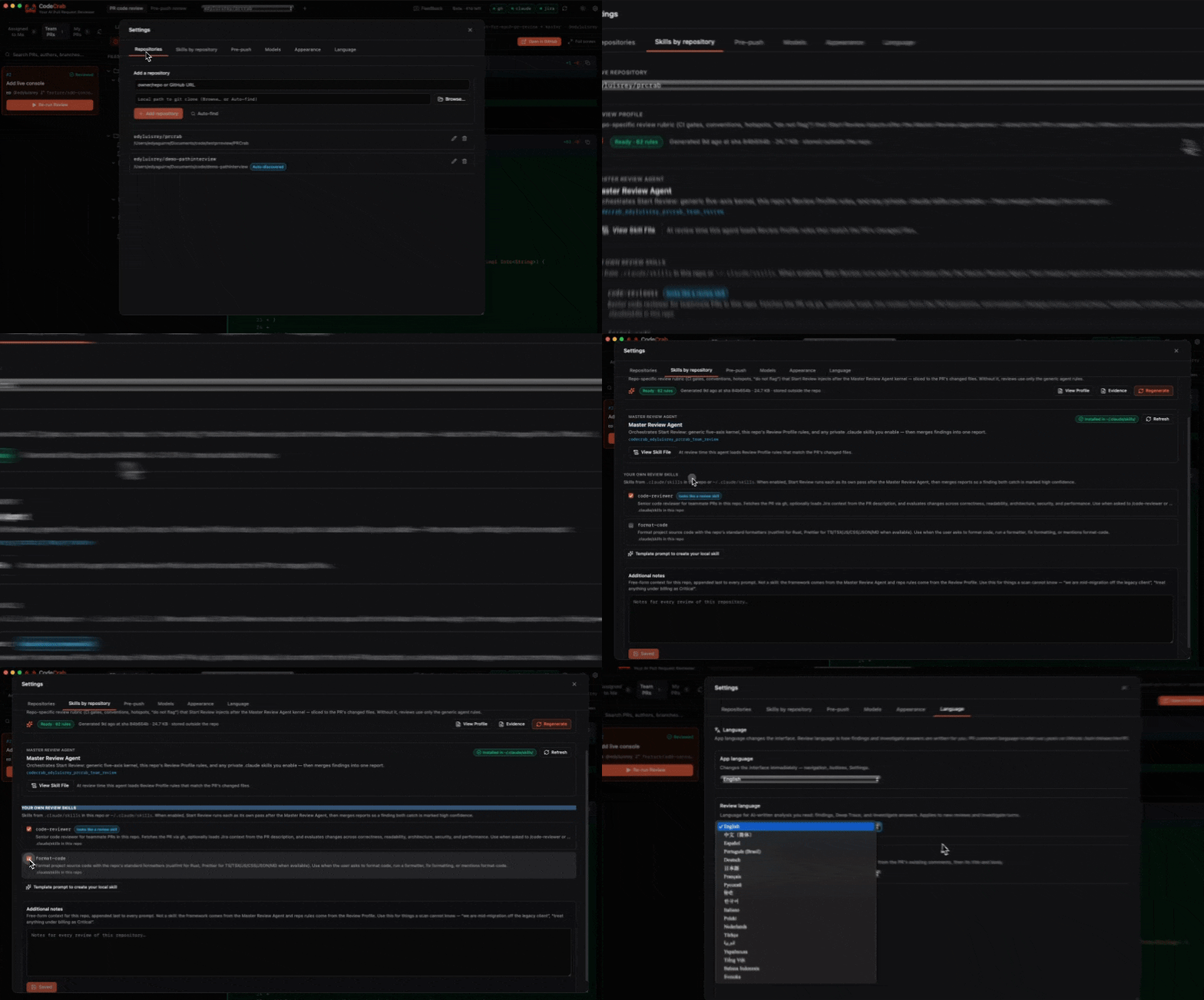
CodeCrab works locally against your complete checkout, not just the lines in a PR. For each repository it builds a review profile from that codebase's rules and patterns. The master review agent uses that profile to guide the review, while specialized CodeCrab skills can focus on areas such as security, test completeness, and correctness. The result is a review grounded in how your project actually works.
A repository profile is a starting point, not a ceiling. You can adjust the criteria, bring in your own skills, and decide which kind of review a particular change needs. A small documentation PR and a sensitive authentication change should not have to run the same deep security review.
Bring the skills your team already trusts
A Staff or Senior engineer may have spent months refining a skill for a particular service, failure mode, or pre-push check. Rewriting it for another tool wastes that experience. CodeCrab recognizes local skills and lets you choose which ones to include when you run a review. Your team's skills and CodeCrab's repository-aware review skills can work together; neither has to cancel the other out.
- For a teammate's PR: combine the repository profile with your team's review skill and investigate findings in context.
- Before you push: reuse a local pre-push skill against changes that have not become a Pull Request yet.
- For a high-risk change: include a deeper security skill when its extra scrutiny is worth it, rather than running it on every PR.
Today CodeCrab works with your local Claude Code setup and GitHub workflow, and brings in Jira context where a ticket explains why a change exists. It fits around your tools and your private repository-specific rules instead of forcing everyone into the same review recipe.
A place to work through findings, not just generate them
A good review is more than a list of comments in a terminal. CodeCrab gives you a desktop view of open PRs and reviews waiting for you, changed files, inline findings, and the code around them. You can navigate a finding, investigate it, ask follow-up questions, and decide whether it is a real issue before acting. The same loop works while reviewing your own local changes before a push.
Built to evolve with the way engineers build software
We want this workflow to remain open as the ecosystem changes. Cursor and Codex review integrations, plus GitLab support, are coming later; they are not available as review integrations today. We are also exploring on-call triage, commit and PR creation skills, and navigable stacks of smaller PRs for larger tasks. Those are directions for CodeCrab, not features you need to assume exist now.
The constant is control
More agents will write more code, and the way teams break down work will keep changing. The principle stays simple: use the full local codebase, keep your existing skills, add repository-aware review where it helps, and give the engineer a clear place to inspect the result. CodeCrab should amplify the workflow you already trust — and leave you free to improve it.
Try it on your next Pull Request
Free Public Beta — runs 100% on your machine. No code leaving your laptop.
Download CodeCrabKEEP READING
PR Code Reviews: how CodeCrab unblocks your team in the AI era
AI writes more code than ever, so review queues are the new bottleneck. Here is how CodeCrab reviews Pull Requests locally, with repo-specific skills and full engineer control.
My PRs — Feedback: turn vague review comments into a clear fix
Generic or unclear feedback on your Pull Request stalls you for days. CodeCrab investigates every comment with full local code context and hands you a ready-to-run fix prompt.
Pre-Push Code Review: catch bugs before the Pull Request even exists
The cheapest bug is the one that never reaches a PR. CodeCrab reviews your local changes with your repo's own profile and skills, so you push higher-quality code the first time.